
Table of Contents
Photoshoots cost a lot of money. A standard fashion shoot costs over five thousand dollars per day. You pay for studio space, models, the photographer, lighting equipment, food, and travel. This process is a massive headache for small and medium e-commerce brands. Brands waste weeks planning a single shoot, and when new inventory arrives, the cycle starts again. This old method drains your budget and slows down your business.
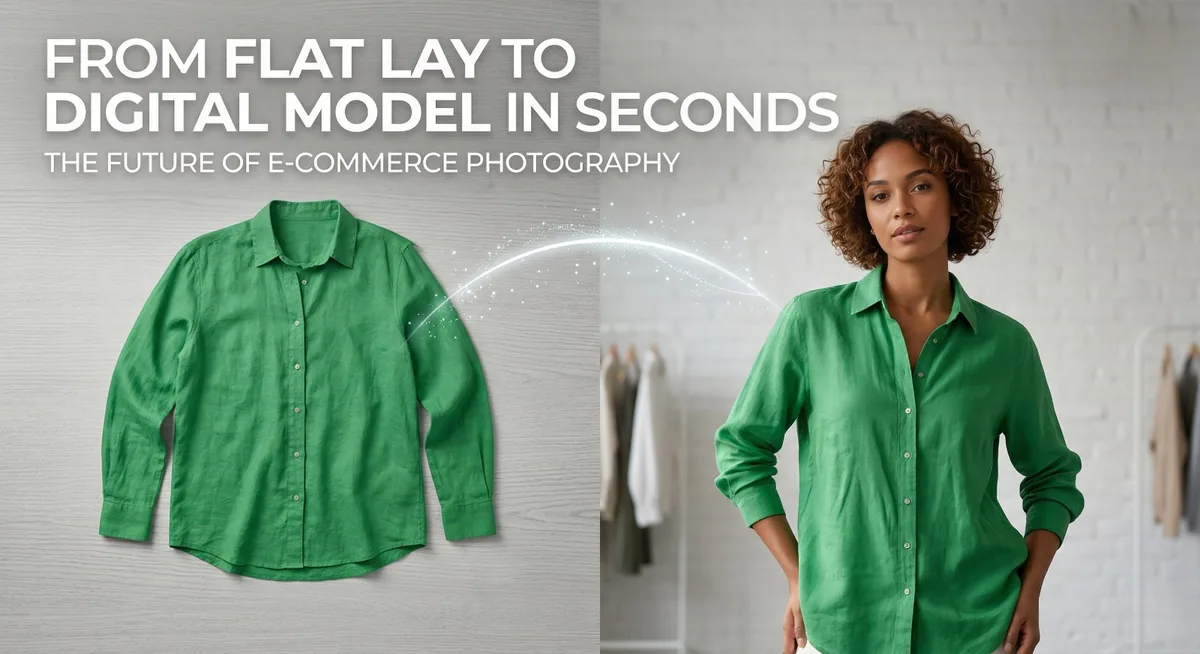
With the rise of 2D Generative AI, you can use a virtual try on tool to convert simple flat-lay clothing photos into studio-grade model images in seconds. This technology changes everything about e-commerce photography. You save money, you save time, and you list products faster.
Why Flat-Lay Photography is Making a Comeback
A few years ago, flat-lay photos looked cheap. Brands placed clothes on the floor, took pictures from above, and the clothes looked flat and lifeless. Customers did not want to buy them. Buyers want to see clothes on real people. Because of this, brands stopped using simple flat-lays.
Brands started using ghost mannequins — clear plastic forms you put the garment on, photograph, then spend hours in editing software erasing the plastic. It requires heavy computer skills and costs too much money.
Today, generative AI changes the rules. Flat-lay photography is useful again. You do not show the flat-lay photo to the customer. You use the flat-lay photo as the input for the AI software. The AI needs a simple picture to understand the garment. The flat-lay is the perfect starting point.
The AI reads the fabric texture, the pattern, and the colors from the flat-lay photo. Then it maps that garment onto a digital human. You save money. You do not buy mannequins. You do not hire photo editors. You take a photo on a table and the AI does the rest.
This process speeds up your catalog updates. You get products online the same day they arrive in your warehouse. You stay ahead of trends and sell more items.
How to Prepare Your Flat Lay Photos for the Best Results
The AI relies on your initial photo. A clear source image produces the best AI model image. Here is how to take a good photo:
1. Use a Flat Surface
A table works best. Place your shirt, pants, or dress flat on the table.
2. Plain Background
A solid background helps the AI isolate the clothing. White or light gray backgrounds yield the best results. Avoid busy patterns.
3. Even Lighting
Ensure the room has bright, even light. Avoid dark shadows and harsh spotlights. Soft daylight from a window works best.
4. Prepare the Fabric
Smooth out large wrinkles with your hands. Ensure the collar sits flat and sleeves rest naturally. The AI copies what it sees.
5. Shoot from Above
Hold your smartphone directly above the garment and point the lens straight down. Do not take the photo from an angle. A modern smartphone is all you need.
Key Takeaway
You do not need multiple camera angles, 3D files, or a laser scanner. You only need one clear photo of the front of the garment.
The 3-Step Process: Flat Lay to AI Fashion Model
We designed our platform for speed. You follow three steps to get professional photos.
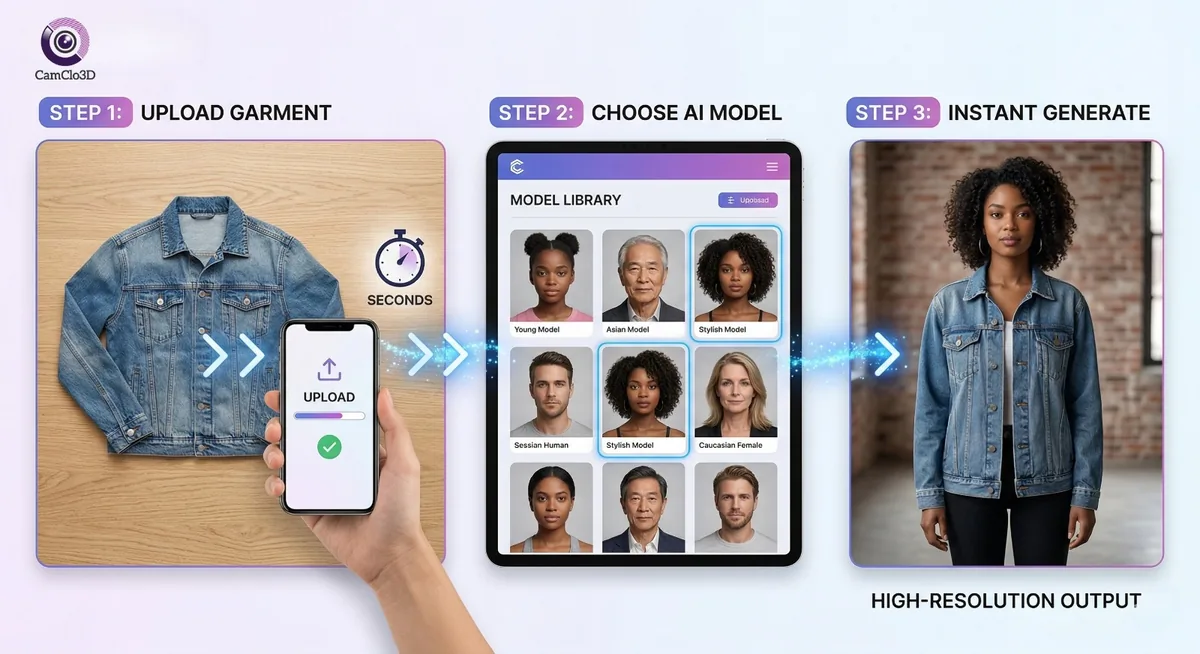
Upload Your Garment
Upload the flat-lay photo into the software. The system processes the image, removes the background, and isolates the garment. You do not need to cut out the background yourself — the software handles the technical work.
Choose Your AI Model from the Library
Select a digital human from our large model library. Our library includes all genders, age groups, and models from all regions of the world. You can filter by garment type and choose poses optimized for dresses, activewear, or casual wear. Generate images of the same shirt on three different models to show buyers how it fits different body types.
Generate and Download
Click the generate button. The diffusion models start working and you receive the final image in seconds. The output resolution meets all requirements for major e-commerce platforms including Shopify and Amazon. The AI adds natural shadows, fabric drape, and matching lighting. Download the final file and upload it to your product page.
Try It Yourself
Turn your flat-lay photos into professional model images in seconds. No photoshoot needed.
Start Your Free Virtual Try-OnWhy Diverse Model Libraries Increase E-commerce Sales
E-commerce success requires trust. Customers buy from brands they trust, and customers trust brands that understand them. When a shopper visits your website, they want to see themselves in the clothes.
In the past, brands hired one or two models for a whole catalog. A brand hired one young female model to wear fifty different shirts. This method excluded many buyers. Older buyers felt ignored. Buyers from different regions felt ignored. The brand lost sales.
AI solves this major problem. You have access to hundreds of digital humans. You can change the model for every product. You sell a winter coat to a young man in New York — you use a young digital model. You sell the same coat to an older man in London — you use an older digital model.
You adapt your visuals to your audience. This strategy builds strong customer loyalty. Buyers feel seen. Buyers feel valued. Valued buyers spend more money. Valued buyers return to your store. Research confirms that diverse model representation directly increases e-commerce conversions.
How to Build a Consistent Brand Identity Using AI
Brand identity is crucial for e-commerce. Customers recognize a brand by its visual style. If your photos look inconsistent — one with dark lighting and another with bright lighting — the catalog looks unprofessional.
In a real studio, keeping things consistent is hard. A photographer sets up lights on Monday, tears them down, and sets them up again on Friday in different spots. The photos look different each time.
AI solves this problem. AI guarantees consistency. You pick a specific lighting style in the software. You pick a specific background color. You select a core group of digital models. You save these choices.
Every time you upload a new flat-lay photo, the AI applies your saved settings. Your whole website looks unified. A unified website builds trust. Shoppers feel confident giving you their money. You build a strong brand identity without hiring an art director.
Traditional 3D Rendering vs. 2D AI Virtual Try On
Traditional 3D try-on has failed small and medium brands. Here is why.
| Factor | Traditional 3D Rendering | 2D AI Virtual Try On |
|---|---|---|
| Photos Required | 50+ per garment | 1 flat-lay photo |
| Processing Time | Hours per garment | Seconds |
| Skills Needed | 3D artist + physics coding | None |
| File Size | Large (slows website) | Standard image (fast loading) |
| Cost | Very high | Fraction of the cost |
| Scalability | Cannot process 100+ items/week | Handles any volume |
To create a 3D digital shirt, you need a massive amount of data. You must take more than fifty photos of a single shirt from every angle. You send these photos to a 3D artist. The artist uses heavy software to build a wireframe mesh of the shirt. Next, the artist applies a texture map. Finally, the artist codes physics into the file — they must tell the computer how the fabric bends and stretches. If they make a mistake, the shirt looks like hard plastic.
This 3D workflow costs too much money. It takes too much time. You cannot process one hundred new shirts a week using 3D rendering. The costs will bankrupt a small store. Furthermore, 3D files are large. Large files slow down websites. If your website loads slowly, customers leave. Search engines penalize slow websites.
2D AI diffusion models solve all these problems. We use advanced models like Kling and Gemini. These systems do not build a 3D world. They do not calculate spatial physics. They look at your single 2D flat-lay image, analyze the pattern and shape, and predict how that shirt looks on a human body. They generate the final 2D image. This method requires zero 3D modeling skills and zero 3D files. It bypasses the entire slow 3D workflow. To understand the technology behind how virtual try-on works, read our detailed breakdown.
You get good results. You get them in seconds. You keep your website fast. You save thousands of dollars every month. 2D Generative AI is the standard for the future of fashion e-commerce.
How Fast Website Speeds Keep Customers
Website speed matters today more than ever. Search engines measure how fast your page reacts to a user. This metric is Interaction to Next Paint. If your page takes longer than a fraction of a second to react, search engines drop your ranking.
3D models ruin website speed. When a user clicks a 3D shirt, their phone must download heavy files. Their phone must render the 3D space. This makes the screen freeze. Users hate freezing screens. They close the tab. They go to a competitor.
2D AI images keep your site fast. A generated image is just a standard picture file. Standard pictures load fast on any phone. Standard pictures load fast on any computer. Your site stays responsive.
When your site is fast, search engines reward you. They push your store higher in the results. When your site is fast, users stay longer. They view more products. They add more items to their cart. You win by keeping things simple and fast.
Turn Your AI Model Image into a Video
Still photos improve sales. Videos improve sales even more. Social media platforms demand video content, and shoppers want to see how clothes look in motion.
After you generate your model image, use our Image to Video feature. This feature takes a still picture of the AI model and adds motion. The model will walk forward. The model will turn around. The model will strike different poses. The fabric will move with the body. You get a professional fashion video in minutes.
You will use these videos in your advertisements. You will post them on social media. You will add them to your website product pages. Video content captures attention fast. It keeps shoppers on your page longer. You create these videos without hiring a camera crew. You do it all from your desk.
Ready to Transform Your Product Photography?
Stop spending thousands on photoshoots. Turn your flat-lay photos into professional model images and videos today.
Get Started with CamClo AIThe Future of E-commerce Photography
The retail industry changes fast. Brands that adapt survive. Brands that cling to old methods fail. The traditional photoshoot is an old method that belongs in the past.
In the near future, no online store will rent a physical studio for basic catalog shots. The costs make no sense. The delays make no sense. AI delivers better results for a fraction of the price.
You will control your entire visual brand from a laptop. Receive a box of new shirts in the morning, take flat-lay photos before lunch, generate model images in the afternoon, and list the items for sale by dinner. This speed gives you power to test new designs faster, react to fashion trends faster, and beat your competitors to the market.
Generative AI is a fundamental business tool. It protects your profit margins and drives your growth.
Conclusion
Photoshoots cost too much money. Traditional 3D methods waste too much time. You need a fast, affordable way to build your product catalog. You have flat-lay photos of your clothes right now. Turn them into professional model images today. Our tool handles the hard work — you focus on selling your products.