
Table of Contents
In the world of US e-commerce, returns are the silent profit killer. We often celebrate rising conversion rates and increasing traffic, but we rarely discuss the financial drain that occurs after the purchase button is clicked. For apparel retailers, this problem is particularly acute. You spend thousands on marketing to acquire a customer, only to lose the sale (and often money on top of it) two weeks later, when the product comes back.
The retail landscape has shifted.
Returns are no longer just a cost of doing business; they are a $890 billion problem for US retailers as of 2026. At the heart of this issue is a simple disconnect: the inability of a customer to know exactly how a garment will look and fit on their own body before they buy it. This is where AI virtual try-on (VTO) moves from being a "nice-to-have" feature to a critical infrastructure requirement.
We believe that the solution to high return rates lies in better data and better visualization. By using artificial intelligence to bridge the gap between a digital image and physical reality, we will help you reduce return rates, improve customer confidence, and protect your bottom line.
The State of Apparel Returns in 2026
To understand why virtual try-on is necessary, we must first look at the data. The numbers regarding returns in the United States are sobering. According to recent industry reports, the average return rate for online apparel hovers between 24% and 30%, significantly higher than the 16.9% average for general retail.
For every dollar you make in sales, you might be giving back 30 cents. But the cost is not just the refunded revenue.
When you factor in return shipping, inspection, restocking, and potential markdowns for damaged goods, the cost of processing a return can reach 65% of the item's original selling price. In many cases, it is cheaper for a retailer to let the customer keep the item than to pay for it to be sent back.
The Phenomenon of "Bracketing"
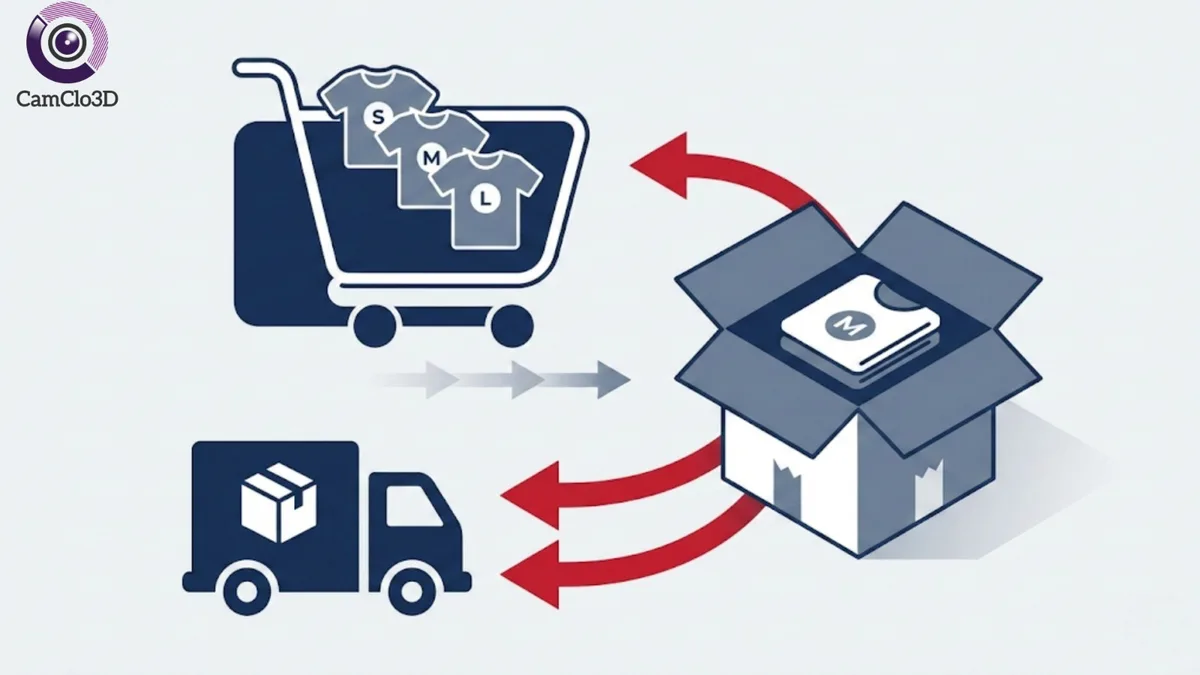
A major driver of these high return rates is a consumer behaviour known as "bracketing." This occurs when a shopper buys the same item in multiple sizes or colours (for example, a pair of jeans in sizes 8, 10, and 12) with the specific intention of keeping the one that fits and returning the others.
Data shows that over 50% of Gen Z shoppers and a significant portion of Millennials engage in bracketing. While this behaviour makes sense for the consumer who wants to avoid the hassle of an exchange, it creates a logistical nightmare for you. It ties up your inventory, increases your shipping costs, and inflates your gross sales numbers with revenue that will inevitably disappear.
Bracketing Is a Confidence Problem
Bracketing is not a sign of a bad customer; it is a sign of an uncertain customer. They bracket because they do not trust the size chart. They bracket because they cannot visualize how the fabric will drape on their specific body type. If we remove that uncertainty, we remove the need to bracket.
What Is AI Virtual Try-On?
AI Virtual Try-On is a retail technology that uses generative artificial intelligence and computer vision to map clothing onto a user's photo in real-time. Unlike older 2D overlays that simply pasted a sticker over a body, modern AI analyzes body geometry, fabric physics, and lighting conditions to generate a hyper-realistic simulation of how a garment fits, folds, and drapes on any body type. This technology allows shoppers to visualize products accurately without wearing them physically, directly addressing the uncertainty that leads to high return rates.
Why Indian Retailers Need VTON Now
With Google launching its own Virtual Try-On features for major brands in India (December 2025), independent retailers risk falling behind. Integrating a dedicated solution like CamClo AI allows your store to offer the same premium "fitting room" experience directly on your website, keeping customers engaged without relying on third-party platforms.
How It Works
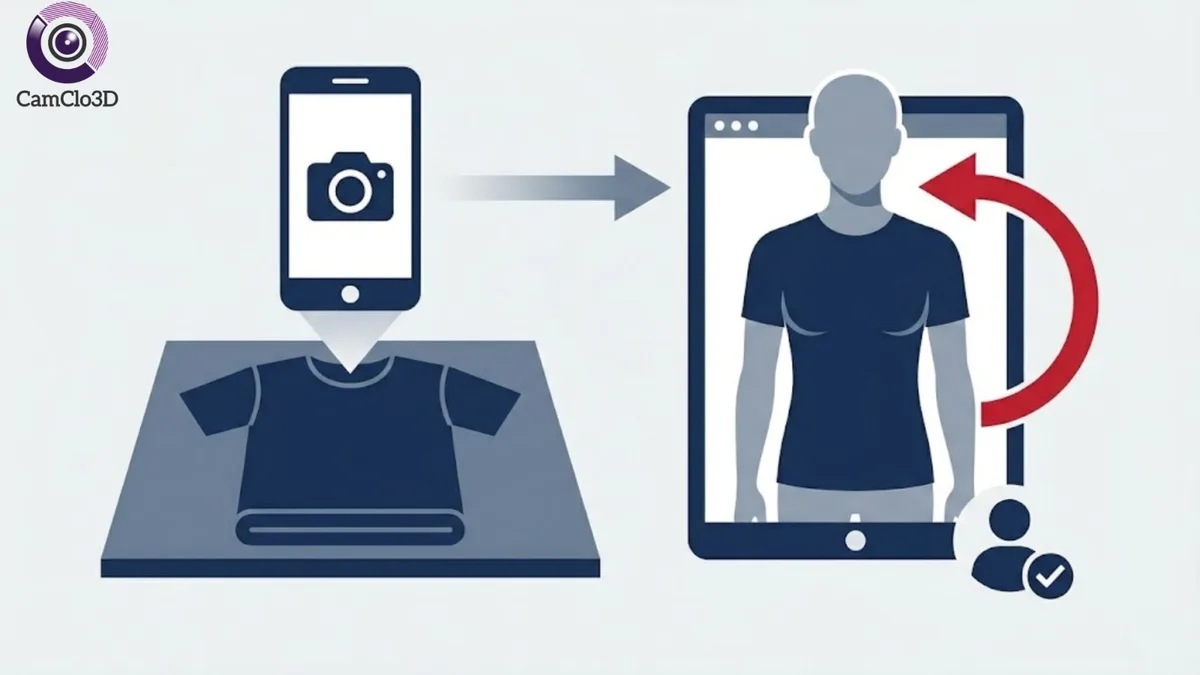
Input
The user uploads a photo of themselves or selects a model that closely resembles their body type and skin tone.
Analysis
The AI analyses the user's body geometry, identifying key points like shoulders, waist, and hips. Simultaneously, it analyses the garment, understanding its texture, fabric weight, and cut.
Synthesis
The technology "warps" and maps the clothing onto the user's image. It accounts for physics: how silk hangs versus how denim folds.
Result
The customer sees a realistic image of themselves wearing your product, complete with accurate shadows and lighting.
This process happens in seconds. It does not require the user to wear a special suit or stand in a specific pose. It is seamless, fast, and accessible directly from a mobile phone or desktop browser.
The Psychology of Returns: Why Shoppers Send It Back
To fix the problem, you must understand the "why." While some returns happen because of defects, the vast majority of apparel returns fall into two categories: fit issues and expectation mismatches.
"It Didn't Fit": 50% of Returns
Size charts are notoriously challenging to read. A "Medium" in one brand is a "Large" in another. Even if a customer measures themselves, they often lack the expertise to know how a specific fabric will stretch or sit. Without visual confirmation, they are guessing.
"It Looked Different Online": 42% of Returns
Studio photography is designed to make clothes look their best. Professional models are often pinned and tucked to ensure the garment sits perfectly. Lighting is optimized. When a customer receives the item, they often find the colour looks different in natural light, or the cut is not as flattering on a non-model body type.
AI Virtual Try-On: The Reality Check Before Purchase
AI virtual try-on directly addresses these psychological barriers. It provides a "reality check" before the purchase. When a customer sees the item on themselves, they form a more accurate expectation. If the shirt looks too tight on their digital avatar, they will size up or choose a different style. This prevents the "surprise" moment at home that leads to a return.
How Virtual Try-On Reduces Returns
The correlation between virtual try-on usage and reduced return rates is well-documented. Retailers who implement robust VTO solutions typically see a reduction in return rates of approximately 20% to 30%. Here is precisely how that reduction happens.
Elimination of Size Uncertainty
When a customer uses VTO, they get visual feedback on sizing. Advanced systems can even recommend the best size based on the visual analysis of the user's uploaded photo. This moves the decision from an abstract guess (reading a size chart) to a visual confirmation (seeing the fit). When customers are confident in the size they selected, they are less likely to order multiple sizes.
Reduction in Bracketing
Bracketing is a symptom of low confidence. By increasing confidence, VTO attacks bracketing at the source. If a customer can see that the Size 10 fits their waist perfectly in the virtual simulation, they feel no need to add the Size 8 and Size 12 to their cart "just in case." Sessions involving VTO have significantly lower average units per transaction of the same item.
Improved Emotional Connection
There is an emotional component to shopping. When a customer sees a product on a model, it remains an external object. When they see it on themselves, psychological ownership begins. They start to imagine wearing it to a specific event. This increases the likelihood that they will keep the item because they have already mentally integrated it into their life.
Accurate Colour and Style Representation
Modern VTO uses physically based rendering. This means it simulates how light interacts with the fabric. A customer can see if a specific shade of green clashes with their skin tone before they buy. They can see if a neckline is too low or too high for their preference. By filtering out these style mismatches before the transaction, you ensure that the items being shipped are items the customer actually wants.
The Economic Impact for Your Store
Let us look at the financial implications for a typical US apparel store. We will use conservative estimates to demonstrate the ROI.
Imagine your online store generates $10 million in gross sales annually.
| Metric | Before VTO | After VTO (20% reduction) |
|---|---|---|
| Gross Sales | $10,000,000 | $10,000,000 |
| Return Rate | 30% | 24% |
| Returns Value | $3,000,000 | $2,400,000 |
| Net Sales | $7,000,000 | $7,600,000 |
| Return Processing Costs (20% of return value) | $600,000 | $480,000 |
| Retained Revenue | — | +$600,000 |
| Saved Processing Costs | — | +$120,000 |
| Total Bottom-Line Impact | — | +$720,000 |
This does not even account for the conversion rate uplift. Customers who engage with virtual try-on features convert at a rate up to 30% higher than those who do not. The combined effect of higher sales and lower returns makes the technology one of the most effective investments you will make.
Environmental Responsibility and Brand Image
US consumers are increasingly conscious of the environmental impact of their shopping habits. The "fast fashion" backlash is real. Returns contribute massively to carbon emissions due to reverse logistics (shipping the item back). Furthermore, a shocking amount of returned inventory (some estimates say up to 5 billion pounds annually in the US) ends up in landfills because it is too costly to inspect and repackage.
By reducing returns, you are not just saving money; you are reducing your carbon footprint. You can communicate this to your customers. A message like "Use our Virtual Try-On to help reduce waste" resonates with modern shoppers. It positions your brand as responsible and forward-thinking. This builds loyalty, which in turn increases customer lifetime value (CLV).
Implementing AI Virtual Try-On: Best Practices
We know that adopting new technology can feel daunting. However, modern SaaS solutions have made integration straightforward. You do not need a team of engineers to add VTO to your store. Here is how you should approach implementation.
Integration with E-commerce Platforms
Whether you use Shopify, Magento, BigCommerce, or a custom stack, most VTO solutions offer plug-and-play APIs or apps. The integration usually involves adding a few lines of code to your product page templates. The heavy lifting of image processing happens on external servers, ensuring your site speed remains fast.
User Experience Design
The "Try On" button must be prominent. It should be located near the "Add to Cart" button. Do not hide it in a menu. The process must be intuitive: "Click here to see this on you." Minimize the steps required. If you ask for too much data upfront, users will abandon the process. A simple photo upload is best.
Model Diversity
If a user does not want to upload a photo, provide a diverse range of AI models. You should offer models of different ethnicities, sizes (including plus sizes), and ages. This ensures every visitor feels represented and can find a body type that acts as a reasonable proxy for their own.
Education
Teach your customers how to use it. A simple tooltip or a 15-second video tutorial can increase adoption rates significantly. Once a customer uses it once and sees the value, they will likely use it for every future purchase.
Overcoming Common Concerns
You might have reservations about the technology. Let us address the most common concerns we hear from retailers.
"Is the technology accurate enough?"
Two years ago, this was a valid concern. Today, generative AI has solved the "paper doll" effect. The clothes drape realistically. While it is not a 100% perfect replica of physical reality, it is exponentially better than a flat 2D image. It provides enough visual context to make a confident decision.
"Will it slow down my website?"
No. The processing happens in the cloud, not on the user's device. The resulting image is served just like any other product image. Your page load speeds will remain stable, which is crucial for SEO and user retention.
"Is it too expensive for small stores?"
The cost of VTO technology has dropped as AI has become more efficient. There are tiered pricing models available. When you calculate the ROI based on the return reduction math discussed earlier, the technology pays for itself very quickly, often within the first quarter of implementation.
The Future of Retail is Personalized
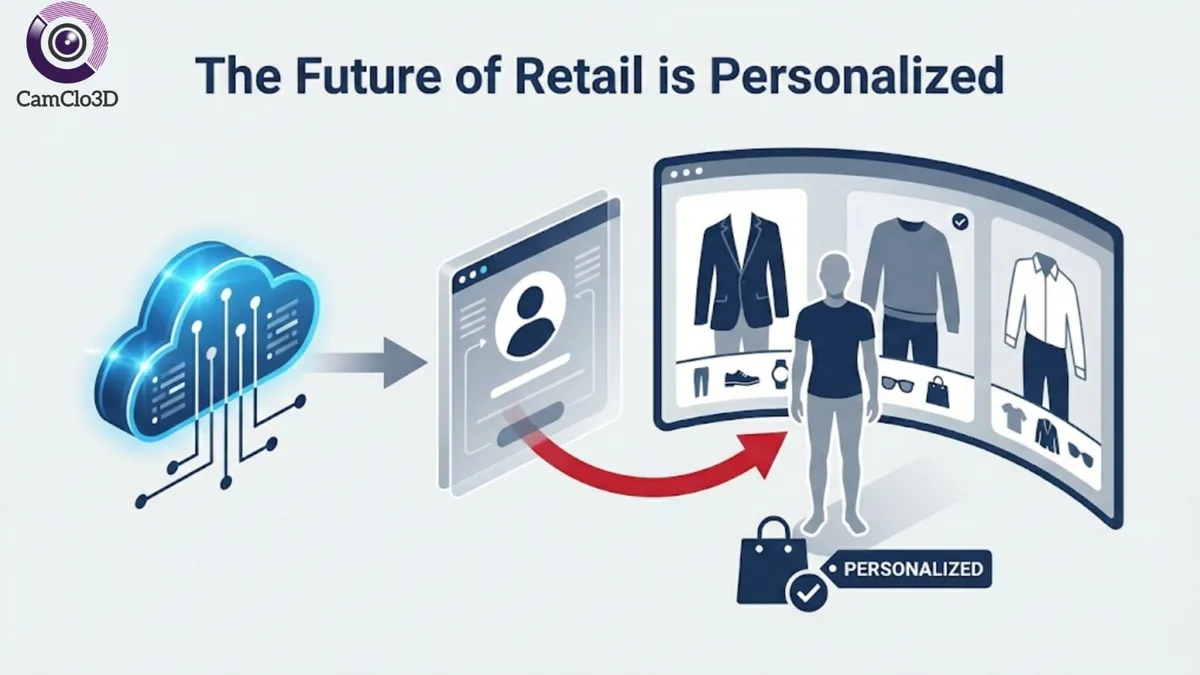
The US apparel market is competitive. Brands like Amazon and Walmart are already investing heavily in AR and AI try-on features. To stay relevant, independent retailers and mid-sized brands must offer comparable experiences.
We are moving toward a future where "hyper-personalization" is the standard. Customers will expect the store to know their size and show them the clothes on their own digital twin automatically. By adopting virtual try-on now, you are future-proofing your business. You are signalling to your customers that you care about their experience and their time.
Conclusion
The era of "buy, try, return" is unsustainable for retailers and frustrating for customers. High return rates are a drain on your resources, your staff, and the environment. AI virtual try-on offers a proven, practical solution to this problem.
By allowing customers to visualize products on themselves, you remove the uncertainty that drives returns. You reduce the prevalence of bracketing. You increase conversion rates and build a more sustainable, profitable business.
The technology is ready. The customers are ready. The only question remaining is whether you are ready to stop losing revenue to returns and start capturing the full value of your inventory.
Frequently Asked Questions
Ready to Reduce Returns with AI Virtual Try-On?
CamClo AI's AI-powered Virtual Try-On technology helps apparel retailers reduce return rates, eliminate bracketing, and boost customer confidence, all from a single photo upload.
Explore Virtual Try-On