

Table of Contents
SellerPic and Fashn.ai have become well-known names in AI-powered ecommerce photography. They offer all-in-one platforms that generate product photos, edit images, and create virtual try-on videos from a single dashboard. Many store owners use them, but many also leave them.
If you are frustrated by credit costs that drain your budget, a workflow that requires too many clicks, or results that do not quite match your product's details, you are not alone. The good news: strong alternatives exist in the same niche, each with different strengths worth evaluating.
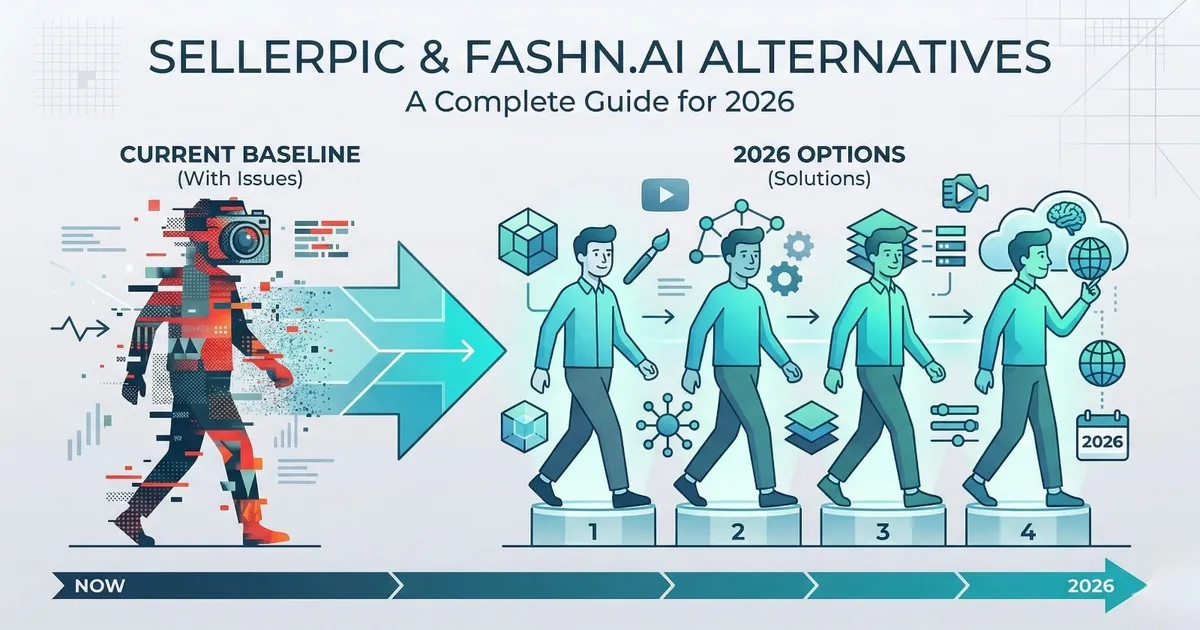
This guide compares the top SellerPic and Fashn.ai alternatives for US clothing stores in 2026, breaking down their features, pricing models, and real-world performance so you can make an informed switch.
The Rise of All-in-One AI Fashion Platforms
In the past, running ecommerce product photography required five different tools: one for background removal, another for color correction, a third for video generation. All-in-one platforms changed the game by consolidating everything into a single dashboard.
SellerPic, Fashn.ai, Weshop, and Camclo all sit in this category. You upload a flat product photo, and the platform handles everything: placing the garment on a digital human, generating a studio background, and producing the final image or video. These platforms effectively replace your entire digital media team.
An Industry Secret About Video Models
Many all-in-one platforms use the exact same video engines behind the scenes: powerful models like Kling or Veo3. The base video quality is often very similar across tools. The real difference lies in the platform pipeline: how well does it read your product photo? How well does it lock buttons and seams? How intuitive is the interface? How much do they charge per generation? These details separate a frustrating tool from a great one.
Why Brands Leave SellerPic and Fashn.ai
If the underlying video models are similar, why do brands switch? The answer is workflow friction and hidden costs.
Credit Drain
SellerPic may charge too many credits for simple tasks. A tool with a cheap monthly fee but aggressive credit consumption means you run out in days, not weeks.
Workflow Complexity
Fashn.ai focuses heavily on high-fashion artistic settings. Store owners who simply need fast catalog updates do not want complex art configuration. They want efficiency.
Interface Friction
If processing a single product requires too many clicks and menu navigation, your team's labor costs silently eat into the savings the AI was supposed to deliver.
Garment Accuracy
Some platforms prioritize aesthetic output over strict product fidelity. When the generated image subtly alters your design, it leads to returns and lost customer trust.
The Alternatives: Honest Breakdowns
1 Weshop AI: Strong Retail Focus
Weshop AI operates as a complete ecommerce tool with solid model generation capabilities. Upload a mannequin photo, and Weshop replaces the plastic with a realistic human. It understands product ads and integrates well with social media dimensions.
Strengths
- Reliable mannequin-to-human conversion: consistently produces natural-looking model replacements
- Retail-specific features: built with ecommerce workflows in mind, not general creative content
- Social media optimization: exports in the right dimensions for Instagram, Facebook, and TikTok ads
Weaknesses
- The interface can feel cluttered for beginners: new users spend time learning the dashboard
- Costs add up quickly when generating thousands of images per week
Best For
Mid-size ecommerce stores that need reliable mannequin replacement and are willing to invest time learning the interface.
2 Piccopilot: Ad Creative Specialist
Piccopilot targets digital marketers who need to produce ad creatives at scale. It takes your raw product and places it in lifestyle scenes, generates text overlays, and acts like a digital advertising agency.
Strengths
- Excellent ad creative generation: purpose-built for Facebook, Instagram, and TikTok ad campaigns
- Lifestyle scene variety: quickly place products in diverse environments
- Text overlay generation: creates ready-to-post social media content
Weaknesses
- Leans toward general product photography (works great for shoes and bags, less so for complex garments)
- Prioritizes ad speed over pixel-perfect garment mapping
Best For
Brands that prioritize social media ad production speed over strict garment accuracy on product pages.
3 Photoroom: Background Removal King
Almost every store owner knows Photoroom. It started as a phone app for fast background removal and grew into a massive all-in-one web platform. It features arguably the best background removal tool on the market and excels at speed.
Strengths
- Industry-leading background removal: handles complex edges (fur, lace, sheer fabric) exceptionally well
- Mobile-first workflow: shoot and edit entirely from your smartphone
- Seamless Shopify integration: easy to connect and push images directly to your store
Weaknesses
- Focuses on still images and general objects: bottles, electronics, packaged goods
- Falls behind specialized fashion tools for virtual try-on videos on clothing
Best For
Stores that need fast, high-quality background removal and basic product photography. Use Photoroom for your general catalog, but not as your primary tool for fashion video content.
4 Camclo: Dedicated Fashion Platform

Camclo competes directly with SellerPic and Fashn.ai as a dedicated all-in-one fashion platform. Like its competitors, Camclo uses top-tier engines like Kling and Veo3, but focuses its entire pipeline on exact garment retention.
Strengths
- Garment-first pre-processing: specific steps lock your fabric details before the video engine starts, preventing design alterations
- Streamlined workflow: removes unnecessary artistic controls and gives merchants a straight path: upload item, select model, get video
- Transparent credit system: predictable pricing without hidden costs that drain your budget mid-month
- Diverse model library: extensive selection of ages, body types, and skin tones for the US market
Weaknesses
- Requires product photos as input: cannot generate from text descriptions alone
Best For
US apparel brands that need accurate virtual try-on with efficient workflow and fair pricing. Ideal for stores switching from SellerPic or Fashn.ai due to cost or accuracy concerns.
Key Factors When Choosing an Alternative
Calculate Cost Per Final Video
A cheap monthly fee means nothing if the platform charges massive credits per video generation. Calculate total cost based on your actual monthly output volume.
Test Garment Accuracy
Upload your most complex product: a winter coat with fur, a dress with lace, a garment with prominent logos. If the platform alters these details, it will cause returns on your real product pages.
Evaluate Batch Processing
Fashion moves in seasons. When you receive 200 new items, can the platform process them in bulk while you sleep? Or does each photo require individual attention?
Check Model Diversity
The US market is diverse. Your platform must offer models of different ages, sizes, and skin tones, and map your garments onto all of them with zero extra effort.
Test the Interface with Your Team
A complex dashboard wastes your team's time and increases errors. The best tool is one your team can start using productively on day one without formal training.
Handling Complex Garments
A basic t-shirt causes few problems for any platform. Complex garments (a winter coat with fur trim, a dress with sheer lace, a leather boot with sheen) expose the true quality of each tool.
The critical step is pre-processing masking: how well the platform separates your item from its background before sending it to the video model. If the masking tool clips the fur or misses the lace edges, the final video looks terrible. Always test with your most challenging products before committing to a credit plan.
The Lighting Factor
Bad lighting ruins a good product photo. When a tool generates a sunny beach background, the light on the model must match the sun. If the lighting looks flat, the photo looks like a cheap collage.
Top all-in-one tools use advanced relighting engines that match environmental light to the garment. The light wraps around the human body, shadows fall naturally, and the result looks like a professional studio shoot. This quality perception directly impacts what customers are willing to pay.
Reviving Your Old Catalog
Here is a strategy that pays for itself immediately: take the old flat photos from products listed two years ago and run them through your new platform. Generate fresh lifestyle images and videos. Update the product pages. Items that sold poorly with flat photos will see a sales spike with new on-model imagery. This turns dead inventory into fresh revenue without shooting a single new photo.
Mobile Shopping in the US
Americans shop on their phones: on trains, on couches, during TV commercials. Phone screens leave zero room for error. Images must load instantly, play smoothly, and show sharp details. If the image looks blurry or loads slowly, the shopper closes the app.
Your platform must export high-resolution, web-optimized files with smart compression. Massive files that crash mobile browsers cost you sales. Ensure your chosen tool optimizes output for the mobile-first reality of US ecommerce.
Tracking Results After Switching
After you switch from SellerPic or Fashn.ai, track your numbers. Do not guess. Monitor these metrics in your store analytics:
- Bounce rate: are visitors staying on product pages longer?
- Time on page: are they watching the new videos?
- Conversion rate: are more visitors adding items to cart and completing checkout?
- Return rate: track over 30 days to see if accurate media reduces returns
The data will validate whether you chose the right platform. If you see improved engagement and reduced returns, the switch was worth every minute of evaluation.
Conclusion
SellerPic and Fashn.ai alternatives exist to solve real workflow and budget problems. The AI fashion industry moves incredibly fast in 2026, and you have strong options to choose from.
Remember that core video models are often the same across platforms. The real competition happens in the user interface, garment accuracy pipeline, and credit pricing. Evaluate your current software honestly. Calculate how much time your team spends fighting the dashboard. Test alternatives with your actual products.
Whether you choose Weshop for its retail focus, Piccopilot for ad creation, Photoroom for background removal, or Camclo for dedicated fashion accuracy, find the tool that fits your specific niche and move your catalog to a platform that works with you, not against you.
Ready to Switch? Try the Fashion-First Alternative
Stop overpaying for credits and fighting complex dashboards. Camclo gives you exact garment retention, a streamlined workflow, and transparent pricing built for fashion ecommerce.
Try Camclo for $1 Today